Finding rare birds part 1:
The story of finding my dream bird, Black-winged stilt, Cahore marsh, Wexford, 10th May 2023.

After twitching a black-winged stilt on the 11th of April with a friend of mine, Mark Stewart I thought this maybe my only chance of seeing this magnificent wader species in Ireland this year at least (as I am sure I’ll see quite a few more throughout the years 🤞). This long winged and legged elegant wader species has been always on my radar as a ‘find’, especially at my local patch, Cahore marsh, Co, Wexford. The habitat here in early spring is always absolutely bang on for this species, though in most years we don’t have an influx like we did in spring 2023.
Anyway, down to the two days of mega patch birding. The 9th and 10th of May. I spent the morning and early afternoon at a work site like I do most days depending on the survey and then I would tend to go for a ramble down to Cahore marsh. The habitat over the previous days I had been here was incredible looking and Brian Haslam had found a great white egret around the south pools and flood the morning of the 9th of May. I had been very keen to see this bird and after my survey headed for the south end of the marsh. Almost immediately after arriving I could see the great white egret feeding among some grey heron in the south pools/flood. A fine start to any afternoons birding in Ireland! As I began to walk down the south track I picked up a glossy ibis flying over the south end before dropping in and walking out of view. Luckily I managed some ropey record shots before it disappeared into cover and I didn’t see it again! I also had some brief views of a drake garganey among vegetation in the back marsh along with the two singing Cetti’s warbler that had been present for some time now. This was a fantastic day on the patch, but still no black-winged stilt!
The drought conditions in southern Europe seem to have had an effect on why Ireland and Britain saw such unprecedented numbers of rare vagrants such as black-winged stilt, night heron and purple heron mainly.
On the 10th of May I did pretty much the same as on the 9th. Working, this time quite close by in Co, Wexford leaving me with a little more time to spend walking Cahore when I was done my surveys. Was today to be the ultimate days patch birding? You bet your life it was. The afternoon actually started out rather quiet and I didn’t see much while walking the south end of the marsh, hearing one of the male Cetti’s singing and drake garageny were the only bird of note. I then decided to walk into the central marsh to see if I could find any rare herons such as night or purple that had been showing up around the country over the past month or so. No joy there, but I did see a couple of bearded reedling which is always a treat. After a couple of very heavy downpours I was beginning to think that many of the birds I had seen the previous day had perhaps left or maybe they were just hiding from the heavy rain and thunder like I should have been! As I began to get tired I was undecided whether to walk into the back marsh field for a nice height advantage over the flooded areas. Knowing that if I didn’t check it and someone else found something I would be kicking myself so I walked slowly into the main back marsh field with my scope over my shoulder being to fade of any hope of finding something juicy! How wrong was I! As I began to set myself up and get my scope ready for scanning I looked into the eyepiece onto a small area of flood and I could not believe my eyes, I had to look in, look away and look in again to make sure this wasn’t tiredness playing tricks on me! But no, there was actually a stunning adult male black-winged stilt sitting among some mallard in the corner of Cahore back marsh. My dream had finally become a reality! If there had been any year in recent times to find a black-winged stilt then it was this year! I quickly took some distant phone scoped record shots just in case the bird flew off. I then sent a very panicked voice note to two of my great friends telling them what I had just found. They are both birders and had known how much I wanted to find this species. The bird just sat among some rocks at the waters edge for some time. Giving me the opportunity to get the news out and let my father know to get down here right away and bag himself a lifer! As I waited for his arrival some birds began to get up and flew around the back marsh, a raptor was around it seemed. And this was exactly the case. A female type marsh harrier began to fly straight for the black-winged stilt area!! Oh no I thought, great to see a marsh harrier but I had really hoped it wouldn’t flush the stilt. As the harrier flew right by the stilt I fired the camera up getting some images of both the stilt and harrier in one image! Boom, not something you will see too often in Ireland. As the stilt returned and the harrier landed out of view my father arrived. I then picked up the great white egret at a distance feeding in a large channel. My father got onto the stilt, phew! While watching the stilt the marsh harrier flew up and gave some very nice views and disturbed a drake garganey on the large pool. Two half days on the patch rewarded me with a black-winged stilt, great white egret, 2 Cetti’s warbler, 2 garganey and some bearded reedling! Not bad!! I had arrived home and had some dinner when I received a phone call from Brian Haslam to say well done on finding the stilt and that an adult night heron had just flown past him at the back marsh! Amazing but quite frustrating also considering I had been there less than 1 hour previously. I did manage to catch up with the night heron over the next few days and weeks and got some nice views. Patch birding at its very best! What will my patch throw up next?! Who knows, but I’ll keep searching.


So far this year I have seen some fantastic birds, long may it last!
#explore #Irishbirding #patchbirding #birdfinding
Winterbirding: More putative ‘grey-bellied brant’ in Dublin this winter?
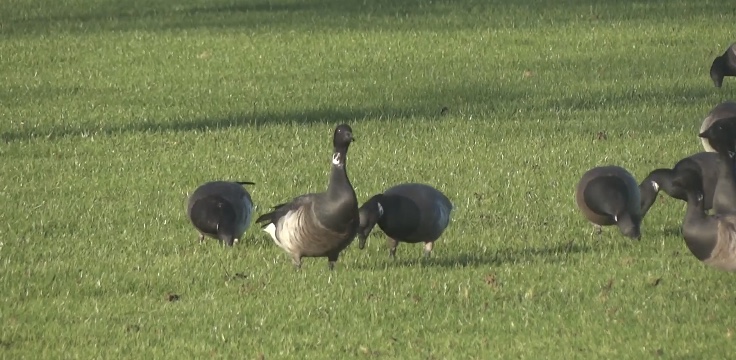
On the 14th it December Joe proudfoot found a nice feeding flock of 1100 Brent geese at Killbarrack Co. Dublin. This flock contained two adult dark-bellied Brent and what appears to be a male ‘grey-bellied Brant’. This bird appears to be a different individual to another adult male that Brian McCloskey found in Co. Louth earlier this winter. An adult male (the same or perhaps another male) was seen at Blackrock Dublin a few days later.
The main issue still remains regarding the uncertainty behind the ‘grey-bellied brant’. The Uncertainty refers to the fact is this brant a separate race, or is it a hybrid between two other brent/brant races? This is the question that still remains. The fact that any genetic work to date has not proven conclusive then the hybrid option may be the case? Even with all this uncertainty I am very keen to document these individuals showing up around Ireland to try and get a better understanding of their identification features. It takes a team to work on these subjects not just one person so the more the merrier when working with these types of tricky identifications. A good number of dark-bellied brent have been recorded this winter in Dublin also which is great to hear. This may mean more people are paying attention to brent identification than in previous years.
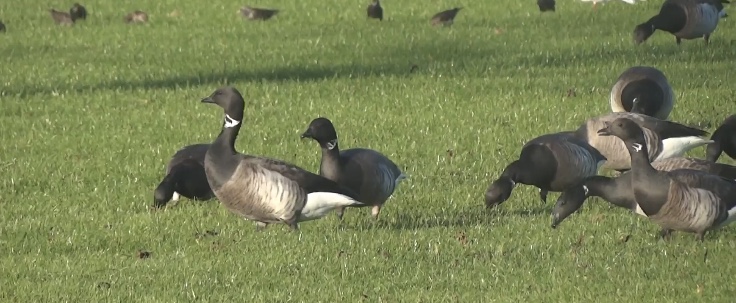
Putative adult male ‘grey-bellied Brant’ with adult male dark-bellied brent and pale-bellied brent - Joe Proudfoot
Even with the strong afternoon sunshine beaming down on this bird you can still clearly see that the under parts are far darker to that of the pale-bellied present to the right and is a different colour tone to that of the dark-bellied.
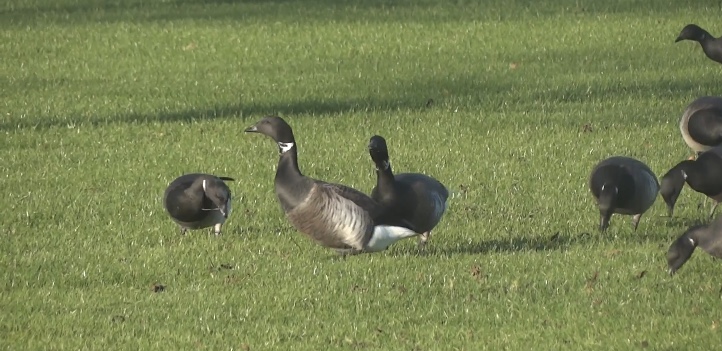
Putative adult male ‘grey-bellied brant’ being attacked by adult male dark-bellied brent - Joe Proudfoot
Note: Broad white neck collar on putative grey-bellied brant’ and similar on the adult male dark-bellied and is what you would expect to see on a black brant almost. Also note the darker brown/grey under parts contrasting with the whiter flanks similar to that of a black brant.
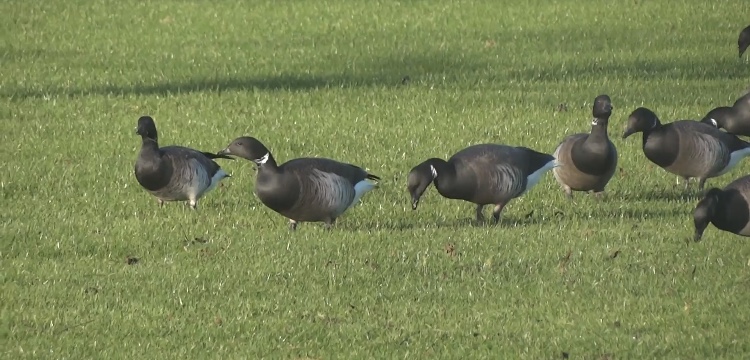
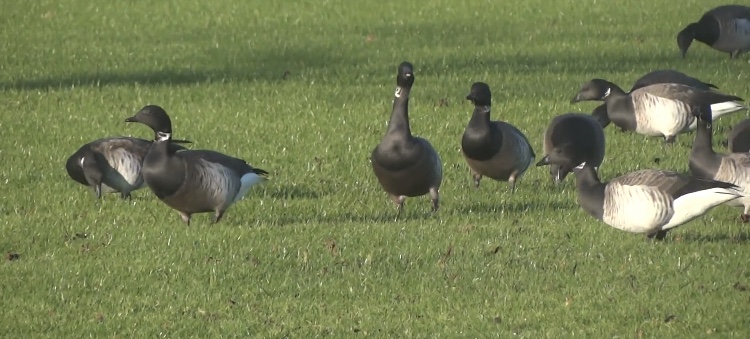
Putative ‘grey-bellied brant’ and dark-bellied brent - Joe Proudfoot
Note: darker upper parts of the putative’grey-bellied’ to dark-bellied and pale-bellied brent. The upper parts of the dark-bellied are a light brown-grey to that of the ‘grey-bellied’ and then again the even greyer pale-bellied upper parts.
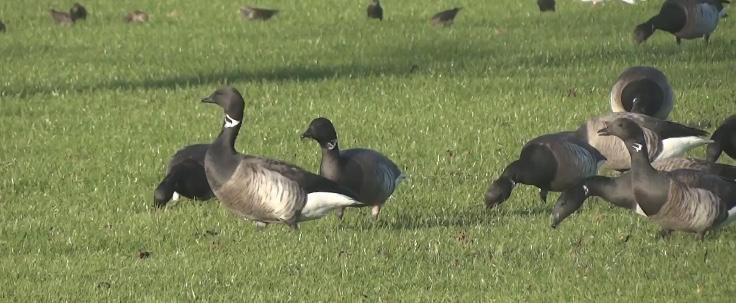
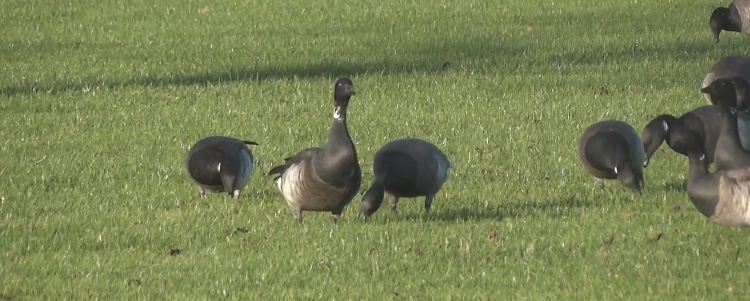
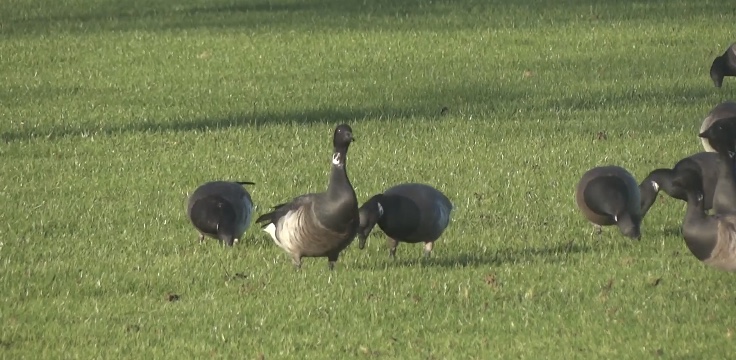
In this photo you can just about make out that the dark runs in between the legs here which is always a very good indication that you are not viewing a pure pale-bellied brent.
A series of images all taken from screen grabs of Joe Proudfoots video footage. The flanks can clearly be seen to be whiter than the adult male dark-bellied to it’s right along with the grey-brown under parts and then the upper parts of the ‘grey-bellied’ are darker. Strong lighting situation’s will of course affect just how dark both the upper and under parts appear on any brent/brant.
I hope to see some more of these geese this winter and get some nice images to work off for more documentation and project work on wintering Irish brent/brant races.
Many thanks to two good friends of mine for their insights and photos once again. And they of course are Brian McCloskey and Joe Proudfoot.
#winterbirding #Irishbirding #brent #brant #vikingoptical #birdguides #Dublin
Ireland’s seventh Marsh warbler
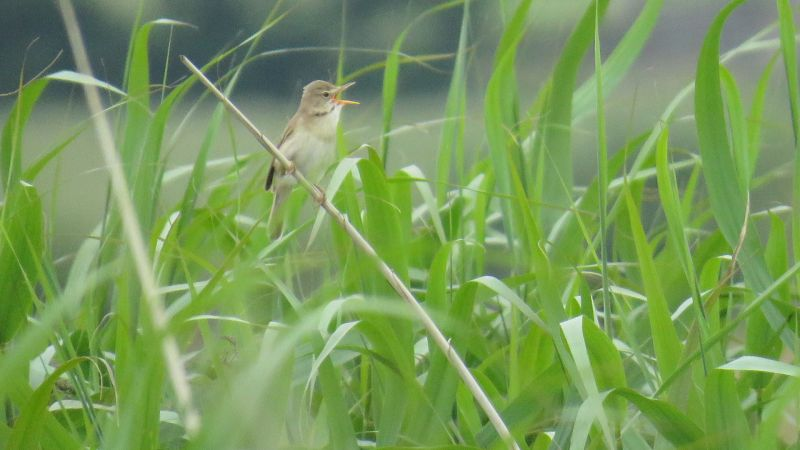
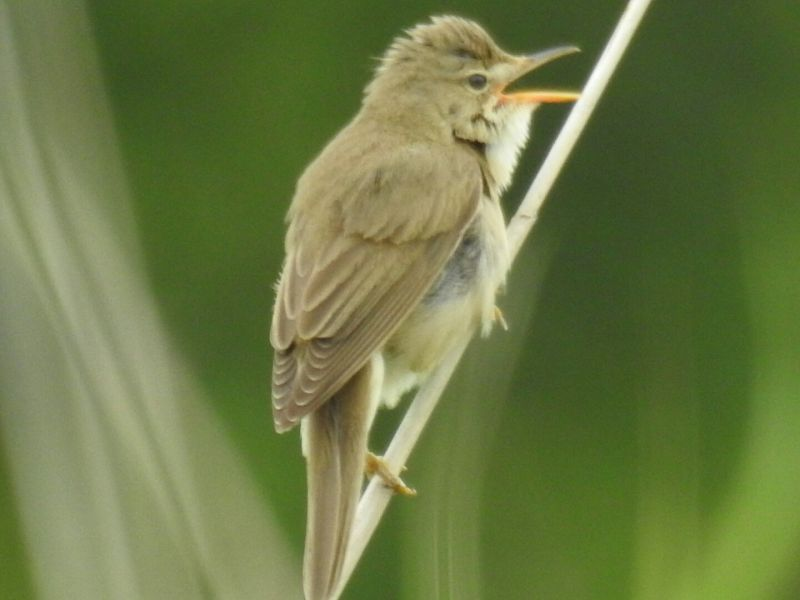
Marsh warbler singing - Cahore marsh, Wexford - Cian Cardiff
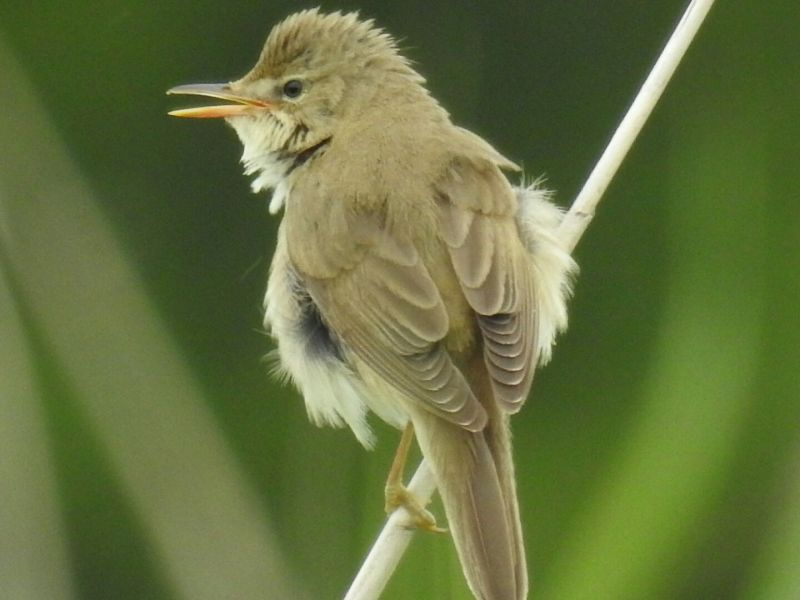
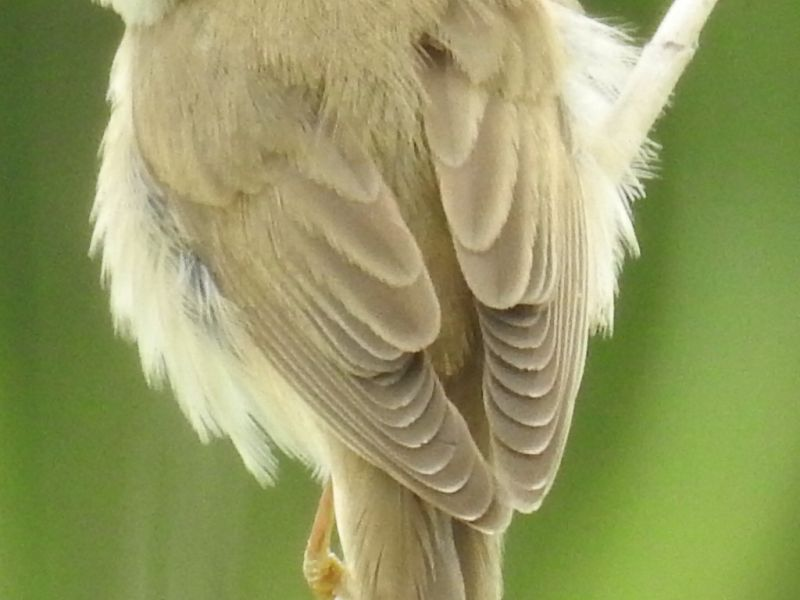
Cahore marsh is well known for its large numbers of breeding reed warbler in summer. In fact it could be one of the most important sites in Ireland for this migrant species. On the 27th of June 2017 just after myself and my parents had moved to Kilmuckridge, Wexford (which is about five minutes from cahore) I went down the marsh for a few hours birding. And I was not expecting to find a seventh record for Ireland. After finding a lovely juvenile little ringed plover in the muddy section of the back marsh I then moved on after the little ringed had flown over my head towards the central marsh. As I opened the gate to walk down the track between the two drainage ditches, I suddenly heard a loud warbler singing its heart out from low downin the reeds to my left. I knew that this did not sound like a reed warbler which I was so used to hearing from mid-April on here. I thought to myself this sounds interesting, trying not to get too excited just in case it was a male reed warbler giving an unusual song. I stayed in the same spot listening to the bird for a couple of hours as I rang my good friend Brian Mccloskey just to let him know that I had a potential very rare bird at Cahore. Eventually I managed some reasonable sound recordings on my phone and sent them around to several birders. I then saw the bird as it creeped up a reed stalk and graced me with a lovely view as it sang from the tops of the reeds. I fired off several record shots, also sending them off to other birders. I received some great feedback that this bird was in fact what I had suspected it to be, a Marsh warbler! Only the seventh time this species had ever been recorded in Ireland to date. A mega to say the least. Thankfully Brian had left after I had figured out that this was a marsh warbler and got to see the bird that evening as it put on a great performance. As it did for several days for many to see and hear!
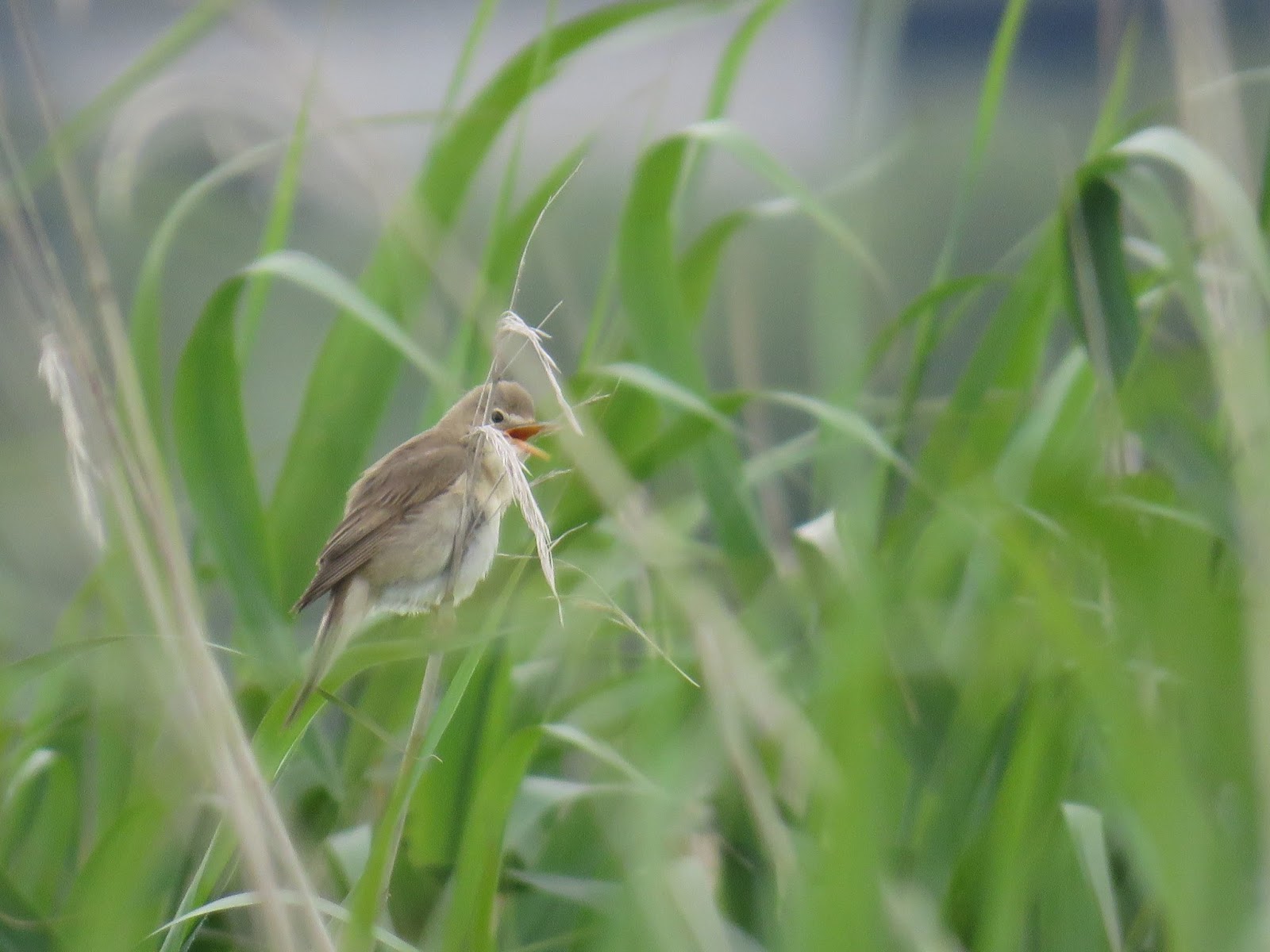
Marsh warbler singing - Cahore marsh, Wexford - Cian Cardiff
The bird sang constantly during it's stay and gave the opportunity for some to get sound recordings which I hope to share some time. This link is well worth a read (Marsh and Reed Warbler | Birding Frontiers (wordpress.com)) Another link to the sound approachs work recently on acros and more. (
https://soundapproach.co.uk/9-in-your-dreams/)Marsh warbler singing - Cahore marsh, Wexford - Cian Cardiff
This was one of the first images I managed to obtain of the bird after it decided to come to the top of the reeds and sing. The creamy/sandy colour can be seen well from this image which really gave me the impression that this was no reed warbler.
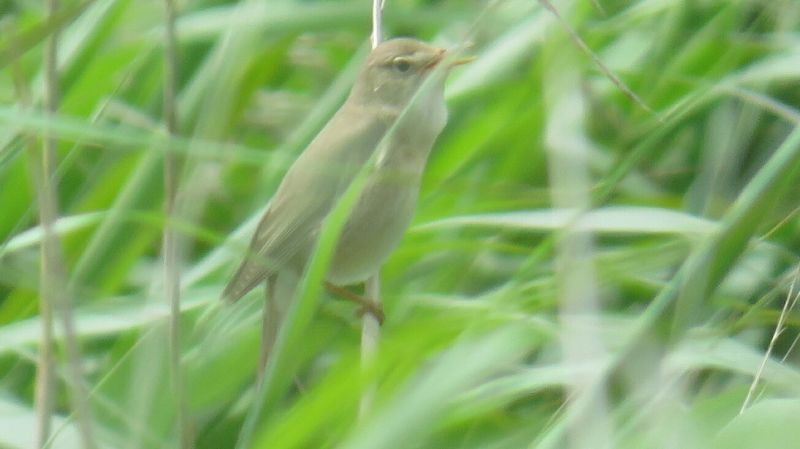
Marsh warbler singing - Cahore marsh, Wexford - Mark Stewart
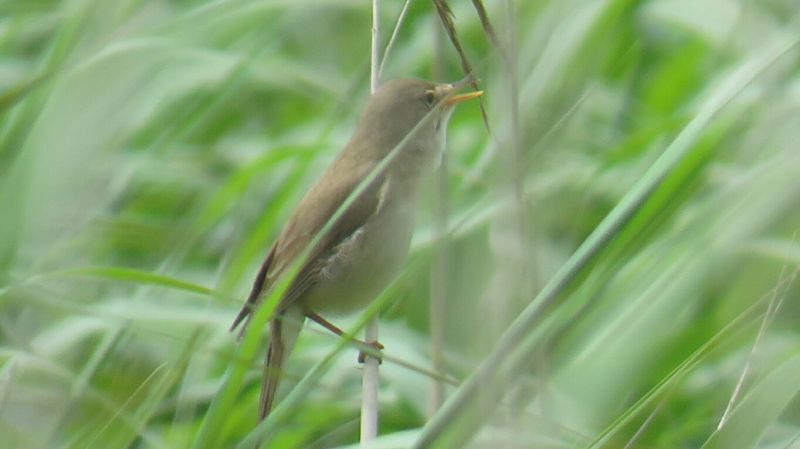
Marsh warbler singing - Cahore marsh, Wexford - Mark Stewart
Marsh warbler singing - Cahore marsh, Wexford - Mark Stewart
Thankfully this bird stayed a few weeks for many birders to enough throughout late June and early July of 2017. Hopefully this is not the last marsh warbler I see in Ireland! I have been lucky enough to now find this marsh warbler along with a cetti's and savi's in Ireland. Great reed next?
#Summerbirding #warbler #rares #Wexford #vikingoptical #irishbirding #birdguides
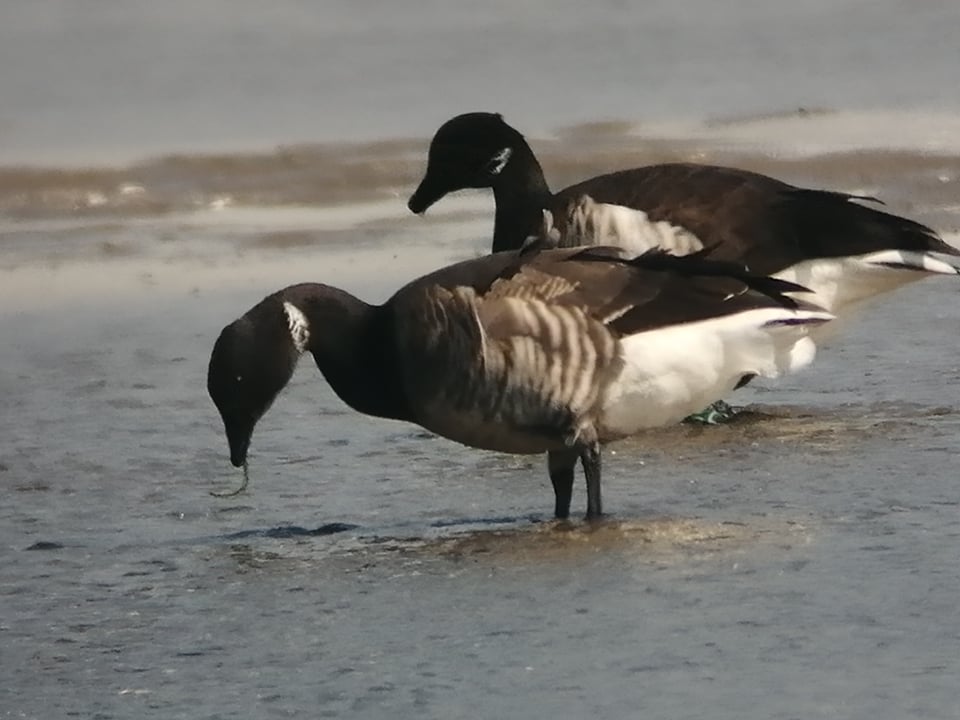
While working on Sandymount strand this morning I came across a flock of 20 brent geese feeding close to the dune pool at Merrion gates. One of these birds was definitely standing out from the 19 pale-bellied even at a distance in the heat haze. It looked like a dark-bellied brent. As I began to move closer to the flock I could then see with my naked eye that this bird was quite stand out, definitely not a pale-bellied from what I could see so far. As I got closer to the bird and set up the scope it was no more than 20 feet away. Giving point blank views. This was a stunning but subtle 2nd calendar year dark-bellied brent. Over the past few weeks there seems to have been an influx of dark-bellys mixing with the pale-bellied along the east coast of Ireland. Jan Rod has been finding most of them and Brian Mccloskey had quite a nice count at Lurgangreen over the past month. Usually we tend to see dark-bellied brent from March into early April in good numbers, but usually just the occasional bird with a flock of pale-bellied at the usual sites. I have not seen an influx like this before really.
Many of the birds that have been found recently are 2nd calendar years. Many of which are sutble in plumage, though still eye-catching enough and showing enough classic features to be identified as dark-bellied. This particular individual was quite interesting when the light began to change. From strong sunlight to dull the birds appearance would change quite drastically. This is to be expected with most birds, but especially when dealing with brent. I was ways quite used to seeing adult dark-bellied at Kilcoole when the large flocks of up to 1000 pale-bellied would begin to gather at Kilcoole marsh in March and April with the occasional 2nd calendar year thrown in over the years. Though over the past few years I have become a lot more aware of immature birds with varying plumages as I have with adults just like the adult I had that was ringed a Presumed hybrid dark x pale-bellied that I saw at Kilcoole earlier this winter. Though I do think that bird was probably still well within range for a pure dark-bellied with white flanks. Who knows what goes on with the Hybridization in remote breeding colonies though!
The key features that make this bird a dark-bellied include: greyish/brown upper parts with a blueish tinge, brown washed flanks and breast, light chocolate brown under belly and a nice collar that perhaps indicates that this is a young male. Most dark-bellied brent of this age that I am used to seeing in Ireland are far darker on the under parts. Though with the variation within all brent races this is something we should come to expect. It seems that more and more people are taking in the different plumage types of Brent these days and this is leading to more expensive plumages of dark-bellied, black brant and the possible subspecies of the 'Grey-bellied brant'. Always a lot to learn about brent races. Luckily enough they will have departed quite soon to breeding grounds in Arctic Canada and Siberia for the dark-bellied so you guys won't have to read anymore about brent geese 🤔😅
A lot more to be discovered next autumn when the brent arrive back again. And I look forward to seeing what we can find. Hopefully a few black brant which always seen to elude me!
A set of phonescoped image's can be found below. Unfortunately I didn't have my camera with me which is quite typical considering how close the bird was showing! But there's always next time ⌚📷




#springbirding #Dublinbirding #brent #geese #wildfowl #Vikingoptical #BirdGuides
For many years I have been watching a small estuary in Wicklow Town. Myself and my father would check this site regularly when we both lived in the county. Nowadays I am lucky to have some work in the area and I can check this beautiful place regularly each month. This is Wicklow's only 'large' estuary bar the small tidal lagoon known as the breaches at Kilcoole marsh further north which is also part of the Murrough wetlands.
Broad lough is well known for it's gull flocks, though these flocks rarely produce any rare or scarce gulls. Over my years of birding here the rarest gull I have seen there to date is most likely Iceland which tells you about all you need to know. Though it seems like an ideal site for species such as, Bonaparte's, laughing, Franklin's and Caspian. I'm sure these species have showed up there on occasions as it is a rather underwatched location. The rarest bird apart from gulls I have seen there would be a stunning adult female red-necked phalarope myself and my father found back in June 2015 which was a lifer for both of us and a brilliant finds tick!
I love sifting through the gull flocks here as you just never know what you might stumble upon! The joys of birding. Each August an adult yellow-legged gull returns and stays right through into November at least. This is a rare occasion of a yellow-legged gull returning to the same site year on year. This bird is now returning since August 2015. I first saw the bird that same month at the same location and began to see it ever time I visited the site for a few months. The bird then seems to depart around mid November. Occasionally the odd Yellow-legged gull will drop into the lough for a while and have a wash. I've seen birds from 2nd calendar year right up to adult at this site. No Caspians just yet!
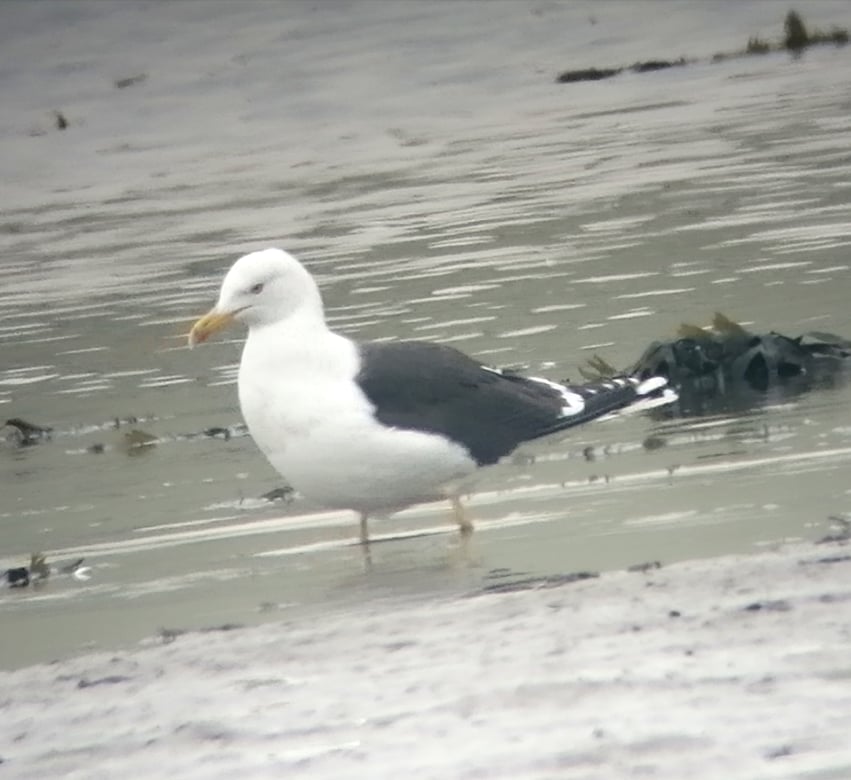
The main gull species at this estuary are common species as you would expect. Herring, great black-backed, black-headed and common gulls. Lesser black-backed gulls also pass though mainly in spring as they migrate to breeding grounds. Any time lesser black-backed gulls pass though a site I get quite excited, as they are notorius for being a species that attracts rarer species such as Yellow-legged and Caspian. I have been lucky to see at least three different adult intermiduis type lesser black-backed gulls here over the years. All three being strikingly dark and long winged, though not fitting the bill for the far rarer Baltic race!
Today (20 April) I was delighted to pick up a dark lesser black-backed in my binoculars as I scanned the gull flock at the south end of the estuary. While setting up the scope on it the flock had moved around slightly. I refound the bird and it was a striking Intermedius type. Dark upper parts (slightly lighter than nearby Great Black-backed) but far darker than any of the other 11 greallsii that where also in the roost. One of which was strikingly pale, a 3rd calendar year type bird which I will attach some photos of below. I managed to document the Intermedius type quite well by phinescoping as I had no camera (typically).
After being at the site for a couple of hours and enjoying studying the Intermedius type I lifted my head from the scope to see a bleached almost pure white 2nd calendar year Iceland gull had popped into the roost also! Bingo, just my second ever record for here. I had also seen a 2nd calendar year at Arklow the week before that had become very faithful to the area. In terms of Wicklow this was a very good day's gulling, it's the little things when your birding these kind of sites! Most of the time you see nothing much at all. A nice flock of dark Arctic type ringed plover with the migrating dunlin where also nice to see. One day I'll find something worth tweeting out as a MEGA there hopefully! 😉



A slightly last minute decision and plan sprung into action when the weather forecast looked good for seawatching off the bridges of Ross, C...